The question how fast does a formula 1 race car go attracts global attention because fans often underestimate the true speed and power behind these machines. Formula 1 cars move far faster than standard sports vehicles and demonstrate performance levels shaped by decades of engineering evolution. Many spectators only realize the magnitude of this speed after witnessing the cars live at a circuit. The acceleration, cornering grip, and braking capability create an experience that goes far beyond television broadcasts. Understanding how fast a formula 1 race car go requires exploration of physics, aerodynamics, and the advanced technology that pushes these machines toward their limits.
Top Speed Of Modern Formula 1 Cars Explained
Modern Formula 1 cars consistently exceed extraordinary speed levels during races. The question how fast does a formula 1 race car go often receives the simple answer of roughly 330 to 360 kilometers per hour, yet the full picture is more complex. Drivers reach these speeds only on specific circuits with long straights and ideal aerodynamic setups. The actual maximum potential becomes higher under experimental conditions. Engineers study every detail to ensure that cars sustain speed without sacrificing stability or safety.
Track layout plays an essential role. Monza remains famous for its long straight sections that allow drivers to reach near maximum speed. Baku and Mexico City also produce remarkable velocity because of track design and elevation changes. The FIA monitors speed carefully to maintain safety standards. The fact that teams consistently push boundaries contributes to the excitement surrounding how fast does a formula 1 race car go.
How Aerodynamics Influence Peak Speed
Aerodynamics determine how fast does a formula 1 race car go in real racing scenarios. Engineers balance downforce and drag to ensure the car remains stable while reducing resistance on straights. Low drag packages allow higher speed but reduce cornering capability, creating a strategic tradeoff. Teams select configurations based on circuit requirements and weather conditions. Aerodynamic efficiency supports both maximum speed and fuel conservation.
Downforce becomes essential because it presses the car onto the track surface. This allows drivers to accelerate sooner after corners and maintain greater stability during rapid direction changes. High speed corners become manageable when aerodynamics function optimally. Teams run extensive wind tunnel testing to refine airflow across the chassis. Engineers ensure that aerodynamic upgrades comply with regulations that restrict design freedom.
Acceleration: The Hidden Factor Behind Extreme Speed
Acceleration provides insight into how fast does a formula 1 race car go beyond top speed numbers. The rapid thrust from the power unit launches the car from zero to one hundred kilometers per hour in roughly 2.5 seconds. This level of acceleration surpasses many high performance road cars and reveals the explosive power within F1 machines. The hybrid power unit combines internal combustion efficiency with electric motor torque. Instant torque delivery supports both race starts and overtaking maneuvers.
Drivers describe the physical sensation as intense due to the G forces generated during acceleration. These forces activate multiple muscle groups and require strict physical conditioning. Teams design power units to deliver maximum output while maintaining fuel efficiency under race regulations. Efficiency becomes critical because fuel load influences weight and speed. The influence of acceleration strengthens the fascination with how fast does a formula 1 race car go.
Why Braking Performance Matters As Much As Speed
Braking capability becomes essential for controlling how fast does a formula 1 race car go. Carbon fiber brakes deliver exceptional stopping power that reduces speed dramatically in a short distance. The deceleration force can exceed five Gs, which challenges drivers physically. Brake temperature management ensures consistent performance throughout the race. Engineers monitor cooling systems carefully to avoid overheating that may lead to reduced efficiency.
Braking zones become strategic areas for overtaking. Drivers position themselves to maximize entry and exit speed while maintaining control. The technique requires skill because small mistakes result in lost time or track position. Teams use telemetry to analyze braking patterns and optimize performance. Superior braking compliments high speed capability and reinforces the engineering complexity behind Formula 1.
5 Factors That Determine Real-World F1 Speed
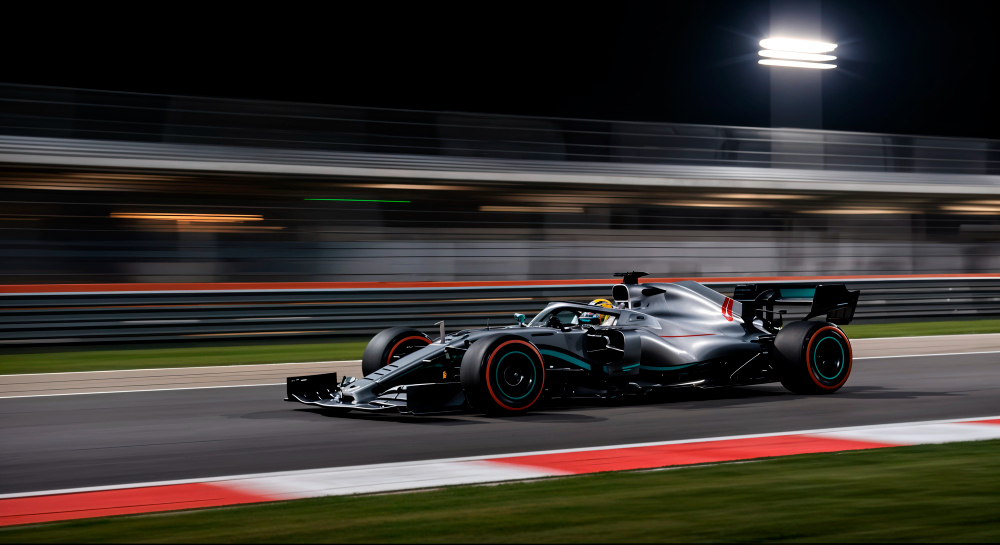
1. Power Unit Performance
The hybrid power unit combines combustion efficiency with electric boost to create remarkable speed. Teams optimize engine maps for different circuit conditions to maintain peak performance. Electric deployment assists acceleration on exits and straights. Efficiency regulations influence how teams balance power and fuel usage. Power unit evolution shapes how fast does a formula 1 race car go across a full season.
2. Tire Grip And Temperature Control
Tire performance determines whether a car can sustain high speed without losing traction. Temperature management becomes essential because grip changes based on heat levels. Drivers adjust style to maintain optimal temperature for maximum performance. Teams monitor tire data constantly through live telemetry. Proper tire management contributes directly to how fast does a formula 1 race car go.
3. Chassis Balance And Suspension Setup
Chassis tuning influences stability at high speed. Suspension adjustments control how the car responds to bumps and corner transitions. Engineers create setups tailored to each track’s characteristics. Drivers provide feedback that shapes setup decisions. Chassis refinement impacts the consistency of high speed driving.
4. Fuel Load And Weight Management
Fuel load significantly affects acceleration and cornering. Lighter cars accelerate faster and maintain better agility. Teams plan fuel strategy carefully to maintain ideal weight throughout races. Efficiency gains allow reduced fuel usage without compromising speed. Weight optimization becomes a silent contributor to how fast does a formula 1 race car go.
5. Driver Skill And Precision
Driver ability influences how effectively speed can be used. Precision in braking, turning, and throttle control determines time gained or lost. Mental focus becomes essential because high speed requires rapid decision making. Drivers train extensively to manage G forces and maintain consistency. Skill remains a defining factor in translating engineering potential into real speed.
Historical Evolution Of Formula 1 Speed
Formula 1 speeds have increased steadily due to technological progress. Early decades of the sport featured slower cars with limited aerodynamic understanding. Modern engineering introduces hybrid systems, advanced data analytics, and composite materials. These developments support the question of how fast does a formula 1 race car go by demonstrating measurable improvement. Speed increases come with stricter safety measures such as halo structures, crash testing, and circuit modifications.
Historical data shows significant differences in acceleration, braking distance, and cornering capability. Classic era cars lacked the precision found today. Drivers faced greater mechanical unpredictability. Modern cars offer stability but require more technical understanding. Teams continue to refine performance with every regulation change.
Why Fans Remain Fascinated With F1 Speed
Fans show fascination because speed represents the core identity of Formula 1. Spectators witness machines performing at limits unreachable in regular automotive environments. Television coverage captures impressive visuals but cannot replicate the raw intensity of live trackside experience. Sound, vibration, and motion combine to create memorable impressions. Fans admire how drivers control such power with precision.
High speed rivalries also contribute to popularity. Battles on straights, rapid overtakes, and strategy shifts keep viewers engaged. Analysis programs examine speed data to help fans understand the depth of performance. Social media spreads highlight clips instantly. Interest in how fast does a formula 1 race car go continues to grow worldwide.
Future Technologies That May Increase Speed Further
Future innovations may continue pushing the limits of how fast does a formula 1 race car go. Engineers explore energy recovery efficiency improvements. Lightweight materials allow stronger chassis construction with reduced mass. Aerodynamic development remains a priority under new rule sets. These advancements combine to create even faster and safer machines.
Artificial intelligence may assist in design simulation. Teams integrate machine learning into data interpretation. This accelerates development cycles without reducing reliability. Hybrid systems may gain additional power capacity. Formula 1 constantly evolves toward higher performance.
Conclusion
The question how fast does a formula 1 race car go becomes more fascinating when examining the engineering, physics, and human skill behind modern racing machines. Formula 1 cars achieve extreme speeds not solely because of raw engine power but through strategic balance of aerodynamics, tire management, and technological precision. Drivers push physical limits while teams refine every component to gain milliseconds of advantage. Fans appreciate the spectacle because the sport combines speed with strategy, science, and emotion. Formula 1 remains a symbol of what becomes possible when innovation and competition work together.